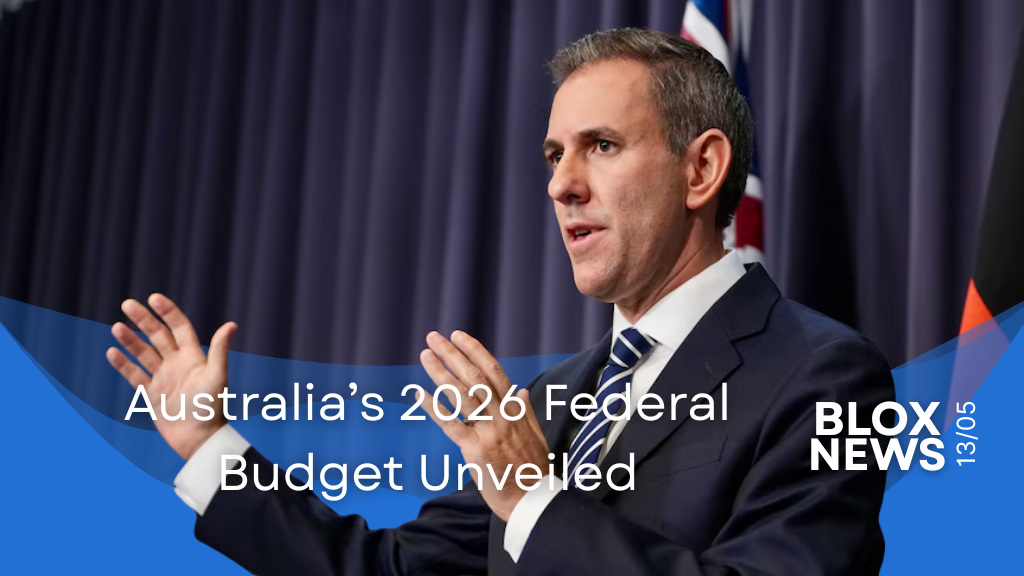
Australia’s federal government has officially handed down the 2026–27 Federal Budget, with Treasurer Jim Chalmers announcing major tax reforms, housing measures, and cost-of-living support during last night’s budget speech in Canberra. The budget focuses heavily on helping workers and first-home buyers while also attempting to reduce long-term pressure on government spending.
One of the biggest announcements was a new round of tax relief for Australians. The government confirmed additional income tax cuts and introduced a $1,000 instant tax deduction for work-related expenses, allowing millions of workers to claim deductions without needing detailed receipts. Around 6.2 million Australians are expected to benefit from the change.
Housing affordability was another major focus. The government announced sweeping reforms to negative gearing and capital gains tax rules aimed at making it easier for first-home buyers to enter the property market. Under the proposed changes, future investment properties will face tighter tax concessions, while new housing developments will still receive incentives. The government says the reforms could help around 75,000 more Australians buy homes over the next decade.
To support housing construction, Labor also revealed a new $2 billion Local Infrastructure Fund designed to help build roads, water systems, and services needed for approximately 65,000 new homes across Australia. Regional communities are expected to receive a significant share of the funding.
Cost-of-living pressures were a key theme throughout the budget. The government announced new tax offsets for workers, cheaper medicines, and support measures aimed at reducing pressure from rising everyday expenses. However, economists noted that the budget does not include as much direct household relief as some Australians had hoped for.
Defence and national security spending also increased. Funding tied to the AUKUS submarine partnership rose significantly, with more money allocated to Australia’s submarine agency and long-term defence projects.
Despite new spending, the government says the budget deficit has improved compared to earlier forecasts. However, Australia’s national debt is still expected to rise above $1 trillion in coming years, with economists warning global conflicts and rising oil prices could place extra pressure on inflation and household costs.
Political reactions to the budget were mixed. Supporters praised the housing and tax reforms as bold attempts to tackle inequality, while critics argued the changes could discourage investment and increase economic uncertainty.